Ecommerce Website Design Steps and Key Tips
Ecommerce website design starts with planning, then moves through UX, payment setup, SEO, and testing. Done well, it makes buying easier and the store easier to grow.
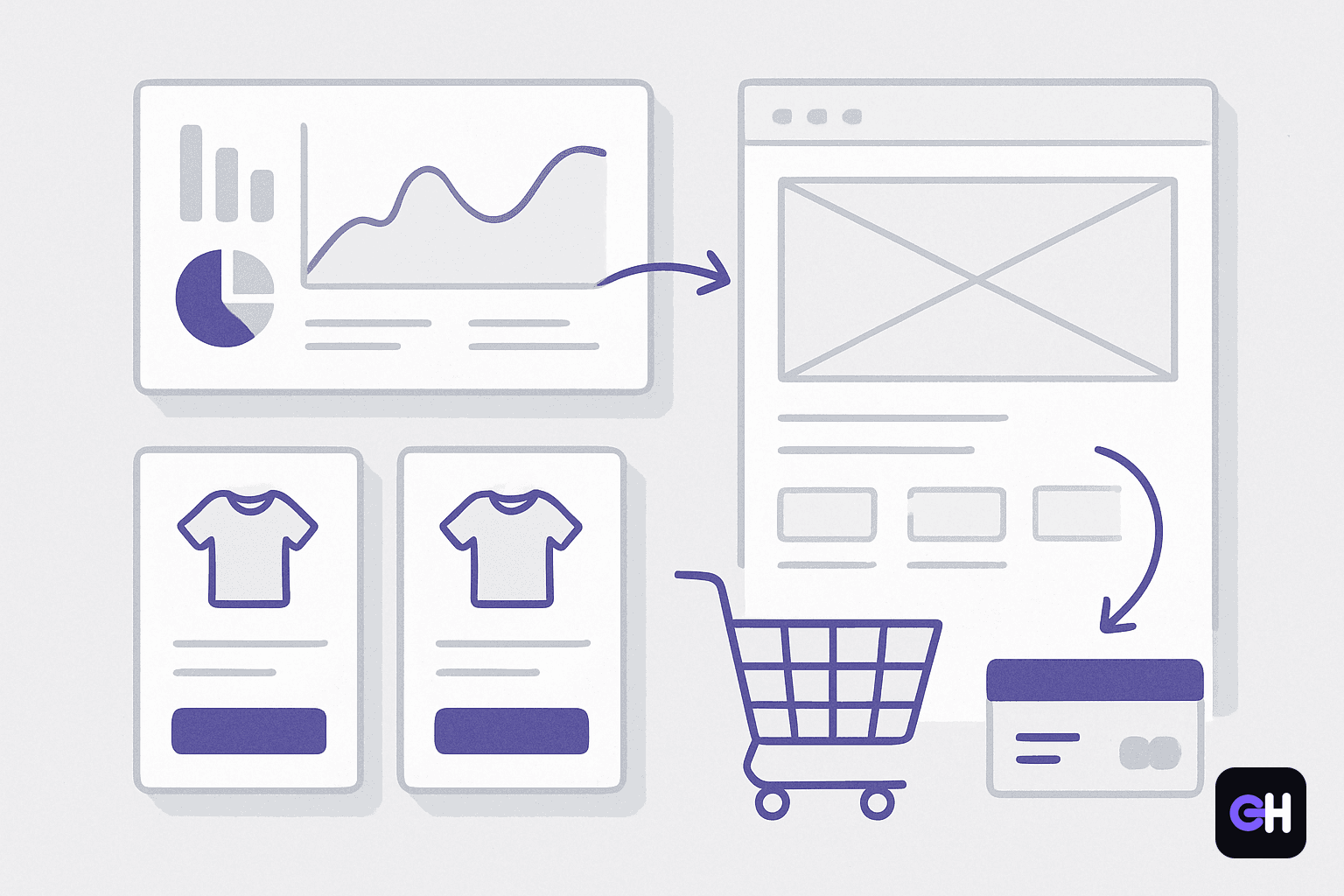
Ecommerce website design starts with defining the business goal, then moves through structure, UX, technical build, SEO, payment setup, and final testing. If you skip any of those steps, the store may look good but still fail at sales, trust, or daily operations. The short answer is: plan the model first, design the buying journey next, then build the technical and SEO foundations before launch.
Step 1: Define the goal, products, and buying journey
Before design begins, you need to know what kind of store you are building: direct product sales, booking-based services, or a mixed model. That decision affects categories, filters, product pages, and even the wording used across the site. You also need to clarify the target audience, product range, and delivery method. A clearer foundation makes every later step easier and more cost-effective.
- List products and categories before final design starts.
- Define the primary audience: retail buyer, wholesale buyer, or both.
- Map the path from homepage to checkout on paper or in wireframes.
- Clarify shipping, returns, and support rules from the beginning.
Step 2: Design the structure and user experience
UX in ecommerce is not just visual polish; it is the ability to help users find products, compare options, and complete a purchase without confusion. The main menu should be simple and the categories should reflect how customers think, not just internal preferences. Product pages must clearly show price, stock, features, images, and the buy button. If this part is weak, traffic will not turn into conversions.
- Keep the menu short, clear, and easy to scan.
- Build product pages with images, specs, benefits, and FAQs.
- Take search and filtering seriously if your catalog is broad.
- Prioritize the mobile version, since many purchases happen there.
Step 3: Keep the visual identity consistent
An online store must build trust, and trust comes from consistency as much as from discounts. Colors, fonts, icons, and layout should match the brand personality and product type. If the website, social media, and packaging feel disconnected, users sense that inconsistency. This matters especially for stores that rely on repeat purchases and long-term loyalty.
What should stay consistent here?
- Use the brand’s main and secondary colors with restraint.
- Keep fonts and spacing consistent across all pages.
- Match homepage banners and imagery to the brand tone.
- Make trust elements such as contact and support clear.
Step 4: Build the technical base, admin panel, and payment flow
In ecommerce, the technical layer is not hidden back-end work; it directly affects the shopping experience and daily management. The admin panel should make it easy to manage products, prices, stock, orders, and shipping status. Payment gateway integration, order notifications, cart behavior, and checkout flow must all work smoothly. If the store is expected to grow, scalability, security, and analytics integrations should be planned from the start.
At GH Company, custom ecommerce website design starts from 320 to 650 million tomans, and the final number depends on project scope, custom features, and system integrations. If you choose the ready-made Shopyar store builder instead, the Bronze plan is 160 million tomans, Silver is 220 million tomans, and Gold is 290 million tomans. The right path depends on your budget, launch speed, and how custom your sales workflow needs to be. For both options, the exact quote comes after a consultation and needs review.
Plan SEO and content from day one
SEO should not be added after launch like a patch. URL structure, page titles, product descriptions, structured data, and site speed should be planned from the start so your pages can be found. Beyond technical SEO, category and product content must help both users and search engines. Weak content leaves you with a technically complete store that still struggles to attract organic traffic.
- Write unique titles and descriptions for every category and product.
- Do not forget structured data and technical product information.
- Optimize images so pages stay fast.
- Create buying guides and useful articles to attract organic traffic.
What changes the price or the result?
The final cost and outcome depend on several factors: number of pages and products, level of custom design, features such as advanced filtering or marketplace functions, integrations with inventory or other systems, and the amount of content that needs to be produced. Execution speed, UX quality, and testing accuracy also affect results directly. If you only build the visuals but ignore the buying flow, SEO, and payment process, the result will be weak. A strong ecommerce site is not necessarily flashy; it is precise, fast, and trustworthy.
For budget context, company websites start from 220 to 450 million tomans, custom ecommerce stores from 320 to 650 million tomans, and custom systems and apps from 260 to 950 million tomans. These ranges show that the final price depends on project definition, not on a fixed number. In ecommerce projects, every extra feature should be judged by its effect on sales and operations. The best approach is usually to build the sales core first and add advanced features later.
What should not be forgotten after launch?
An ecommerce website needs ongoing care after delivery because products, prices, content, and campaigns change constantly. You need a plan for support, bug fixes, updates, and gradual improvements so the site keeps moving. Tracking user behavior, conversion rate, and top pages will show what needs refinement. An online store is a living product, not a one-time deliverable.
Conclusion: good design makes sales possible
In simple terms, ecommerce website design starts with understanding the business and shaping the buying experience, then moves into technical implementation, SEO, payment, and testing. The key is not to treat these steps as separate; good design without SEO is incomplete, and good SEO without weak UX will still fail. When structure, content, and technology work together, the website becomes a real sales channel instead of just a showcase. At GH Company, we usually run projects with that same logic: planning, design, execution, and quality control in one path.
Frequently asked questions
What are the main steps in ecommerce website design?
The main steps start with understanding the business goal and move through structure, UX, technical development, payment integration, SEO, and final testing. Done well, the store becomes easier to use and better prepared for sales.
Is UX more important than SEO for ecommerce website design?
Both matter and should not be treated separately. UX helps users buy more easily, while SEO helps them find the store in the first place; a successful site needs both.
How is ecommerce website design pricing determined?
Pricing depends on the number of pages and products, the level of custom design, required features, integrations, and content volume. At GH Company, custom ecommerce starts from 320 to 650 million tomans, while Shopyar has 160, 220, and 290 million toman plans.
Related GH Company service
Websites & Digital Products
Corporate sites, stores, campaign landing pages, apps and custom platforms — all bespoke-coded.
Be the first to comment
Comments appear after review. Your email is never displayed.
Related reading
Checkout Page Design Optimization Guide for E-Commerce Sales Growth
Optimizing your checkout page is one of the fastest ways to boost e-commerce conversion rates. Simplify checkout steps and build trust to increase online sales.
WebHow Much Does Mobile App Development Cost? (Android & iOS Pricing)
Custom mobile app development costs between 260 and 950 million Tomans. With Flutter technology, Android and iOS versions are built from a single codebase.
SEOGoogle Tests Tracking Parameters in AI Overviews Links
Google tests URL tracking parameters for AI Overviews links, allowing marketers to separate AI search traffic from organic web results in analytics.